

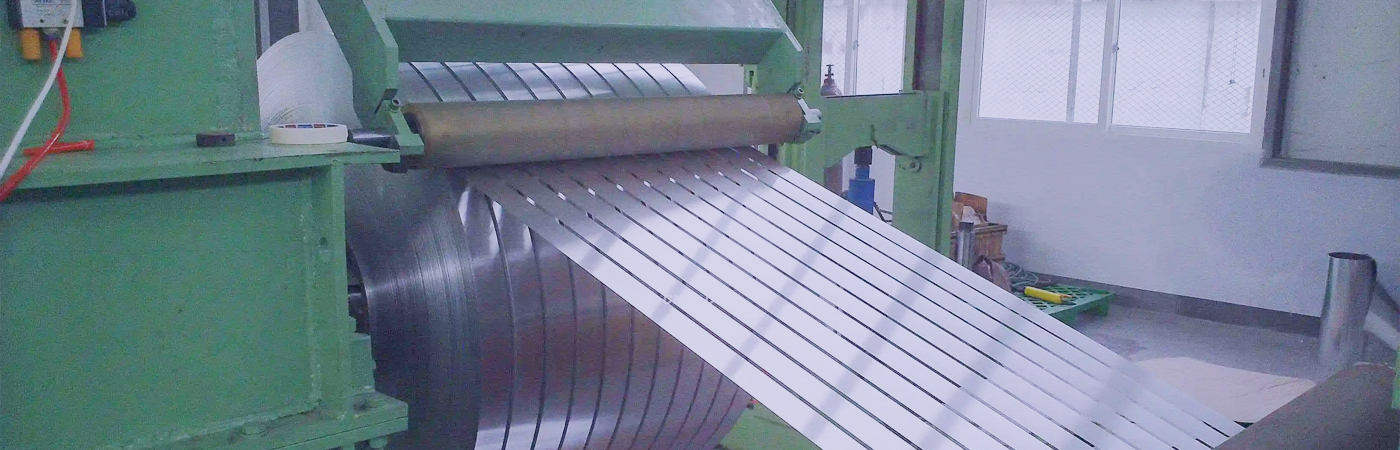
Aluminium Strip 10mm
One concern to control: edge quality (burrs) on 10 mm slit widths
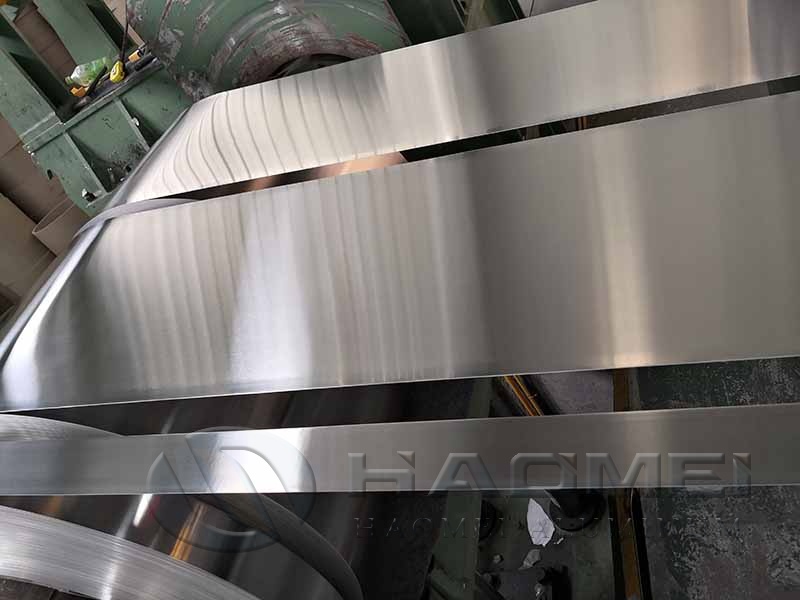
A 10 mm wide aluminum strip is usually made by slitting a wider master coil. For many end uses (stamping, spacers, electrical bus links, trims, heat-transfer fins), the biggest recurring production issue is not chemistry, it is edge condition: burr height, micro-cracks, and edge wave. These defects can trigger assembly fit-up failures, insulation damage, premature corrosion initiation, and poor forming.

Specification steps that prevent fit and forming problems
Use this step-by-step spec template in your RFQ and incoming inspection plan.
Step 1: lock the dimensional definition
Provide all four, not only the width:
Width: 10.00 mm target, with a measurable tolerance (example: ±0.05 mm or tighter if needed).
Thickness: state nominal and tolerance (e.g., 0.30 mm ±0.01 mm).
Edge condition: slit edge, deburred, rounded, or milled; specify maximum burr height.
Flatness/edge wave: define maximum camber and edge wave allowed per meter.
Why: a 10 mm width magnifies edge defects. Even if thickness is correct, a burr can make the "functional width" too large for tight channels or automated feeders.
Step 2: choose alloy and temper based on forming and conductivity
If you need high conductivity and easy forming, 1xxx alloys are common. If you need higher strength and better dent resistance, 3xxx/5xxx/6xxx may fit, but formability and springback change.
Two commonly specified options for narrow slit widths are:
1050 Aluminium Metal Strip for high electrical/thermal conductivity and good anodizing response.
1100 Pure Aluminum Strip for excellent formability and corrosion resistance in mild environments.
Note on verifiable standards: temper designations such as O, H14, H18 follow EN and ASTM conventions; for wrought aluminum product requirements, widely used references include ASTM B209 (general requirements for aluminum and aluminum-alloy flat-rolled products) and EN 485 (aluminum and aluminum alloys: sheet/strip/plate; mechanical properties and tolerances). Always specify which standard governs tolerances and test methods.
Step 3: specify edge and surface acceptance criteria (the burr checklist)
Include measurable, shop-floor-ready requirements:
Burr height max (both edges): define in mm.
No edge cracking visible under 10× magnification (if you stamp or bend).
No telescoping, no heavy edge wave.
Surface: no oil stain, no roll marks beyond agreed limit; define allowed scratches by length/depth if appearance matters.
Step 4: define packaging for narrow widths
Narrow strips are vulnerable to handling damage.
Coil ID/OD limits for your decoiler.
Interleaving paper or film if cosmetic.
Edge protectors and stretch wrap.
Label: heat number, alloy/temper, thickness, width, net weight, standard.
Quick comparison table: what changes when you tighten edge quality
| Requirement you tighten | Typical reason in production | What to ask the slitter/mill to do | Cost impact (directional) |
|---|---|---|---|
| Lower burr height | Prevent insulation cuts, feeder jams | Sharper knives, optimized clearance, deburring pass | ↑ (extra setup, slower line) |
| Lower camber/edge wave | Improve straight feed in stamping | Tension control, leveler pass | ↑ |
| Tighter width tolerance | Fit in channels, precise spacers | Better measurement control, slower slitting | ↑ |
| Clean/dry surface | Adhesion, welding/brazing prep | Controlled rolling oil, cleaning, protective film | ↑ |
Process realities: how 10 mm widths are produced, and where defects arise
Most 10 mm widths are slit from a wider rolled product. The critical variables that drive edge quality are:
Knife sharpness and knife-to-knife clearance.
Strip tension and recoiling conditions (prevents edge wave).
Material temper (harder temp may burr more and crack at the edge if tooling is poor).
Coil handling (narrow bands are easy to nick).
Actionable factory audit questions:
How often are slitters re-ground, and how is clearance set by thickness?
Is burr measured per coil, per slit head, or only when issues occur?
Is there a leveler pass after slitting for flatness?
Standards and compliance checkpoints to include in contracts
Use standards as contract language so disputes are measurable.
Dimensional tolerances: reference EN 485 tolerance tables (or an agreed equivalent) for thickness and width.
Mechanical properties: require a mill test certificate (MTC) showing alloy, temper, tensile/elongation per standard.
RoHS/REACH: if the strip goes into electronics or building products, request declarations aligned with EU RoHS and REACH requirements (the declarations are verifiable documents).
Packaging and traceability: coil labels tied to heat numbers and test certificates.
Applications where edge quality is most critical
Insulation-wrapped conductors and bus connections: burrs can cut films.
Stamping and progressive dies: edge cracks become split defects.
Automated feeding and pick-and-place: edge wave causes misfeeds.
Decorative trims: burrs ruin visible edges and anodized appearance.
Pricing drivers and market cycle signals (what you can verify)
Pricing for narrow slit products typically stacks up as:
Base aluminum price (commonly benchmarked to LME aluminum, publicly available).
Conversion premium (rolling + slitting + leveling + QA).
Alloying premium (varies by alloy family and availability).
Freight and packaging.
Market cycle signals to monitor:
LME price trend and regional premiums (published by exchanges/price reporting agencies).
Energy costs: aluminum rolling and remelt are energy sensitive.
Capacity utilization in rolling and slitting: when lead times extend, conversion premiums tend to rise.
Procurement control: split your RFQ into "metal basis" and "conversion" where possible, so you can compare offers consistently across suppliers and regions.
Incoming QC checklist (10-minute dock inspection)
Measure width at head/middle/tail with calibrated tools; record.
Check burr by fingernail catch plus gauge/visual under magnification (as specified).
Verify camber by laying 1 m length against a straight edge.
Confirm coil ID/OD and winding direction.
Match label heat number to MTC.
If you implement only one improvement for a 10 mm strip program, make it a quantified burr requirement plus a sampling plan. It reduces downstream rejects more reliably than tightening alloy chemistry alone.
Original source: https://www.aluminumstrip24.com/news/aluminium-strip-10mm.html
Tags: **aluminium strip 10mm**, **aluminum flat strip**,
Previous: Aluminium Strip For Transformer Winding
Next: Aluminum Strip Ceiling