

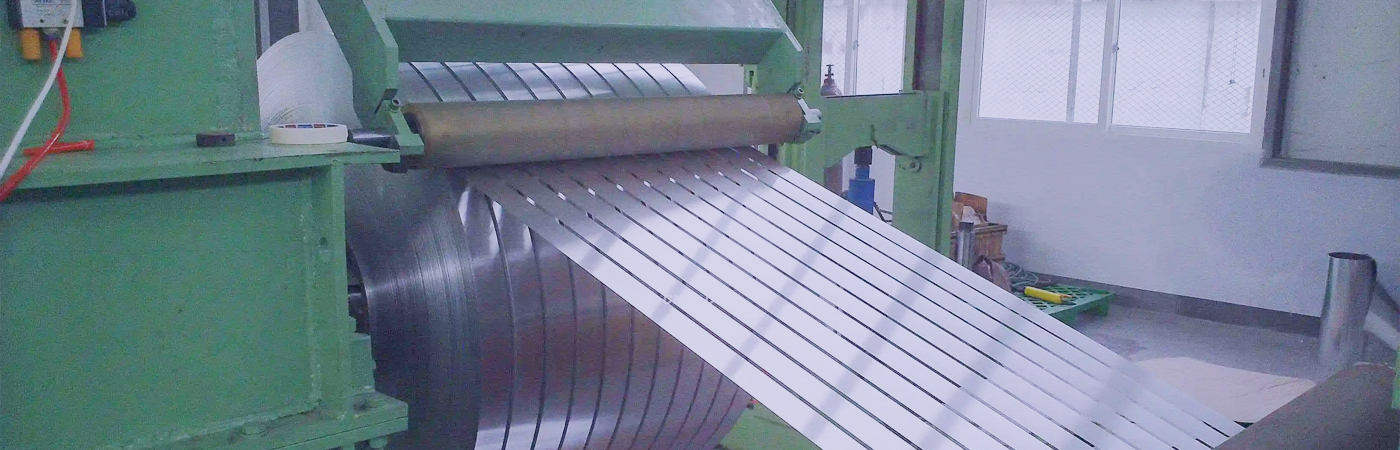
Coated Aluminum Strip
Coated aluminum strip is selected when a narrow aluminum flat product must deliver appearance, corrosion resistance, insulation, reflectivity, or brand color before it reaches the production line. The main concern is not only color matching. It is coating adhesion. Poor adhesion causes edge peeling, cracking during bending, staining after outdoor exposure, and rework during stamping or roll forming.
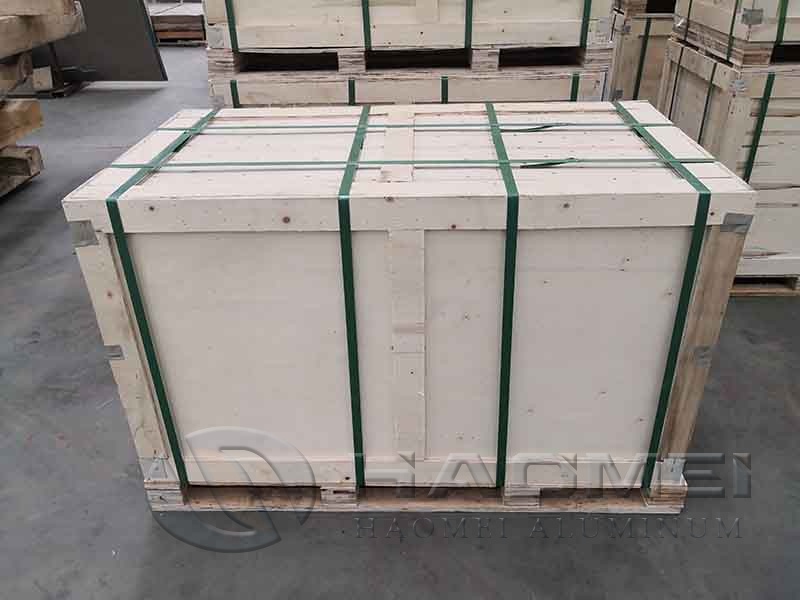
For industrial users purchasing in high volume, the practical question is simple: will the painted, laminated, anodized, or chemically treated surface stay attached through slitting, forming, storage, transport, and service? The answer depends on alloy selection, surface pretreatment, coating chemistry, curing control, and inspection.
Why adhesion fails before the metal does
Aluminum naturally forms an oxide layer. That oxide is useful for corrosion resistance, but it can also interfere with paint or film bonding if cleaning and pretreatment are weak. Oil residue, rolling lubricant, excessive oxide, moisture, and uneven curing are common causes of coating lift.
Recognized standards help define this risk. EN 1396 covers coil-coated aluminum sheet and strip for general applications. EN 573 defines chemical composition for aluminum alloys, while EN 485 covers dimensional and mechanical requirements for aluminum flat products in Europe. In the United States, ASTM B209 is widely referenced for aluminum and aluminum-alloy sheet and plate. For adhesion testing, ASTM D3359 and ISO 2409 are commonly used cross-cut methods. For corrosion screening, ASTM B117 salt spray is often specified, although it does not perfectly predict all outdoor environments.
Coating options compared
| Coating system | Typical strength | Common concern | Practical use |
|---|---|---|---|
| Polyester PE | Cost-effective color coating, good formability | Lower UV resistance than PVDF | Indoor trims, panels, appliance parts |
| SMP or modified polyester | Better weathering than standard PE | Requires controlled curing | Exterior trims, signage, building parts |
| PVDF | Strong outdoor color retention and chemical resistance | Higher material cost | Architectural exterior, roofing accessories, facade details |
| Epoxy | Good adhesion and chemical resistance | Limited UV resistance outdoors | Electrical insulation, internal components |
| Anodized surface | Hard oxide layer, metallic appearance | Bending radius must be controlled | Decoration, electronics, nameplates |
| Laminated film | Special texture or protective function | Edge sealing and heat resistance | Decorative parts, appliances, transport interiors |
For exterior products, PVDF is often preferred because fluoropolymer coatings have strong weathering performance. For indoor formed parts, PE or epoxy may be sufficient if bendability and adhesion pass the required tests.
Specification checklist for adhesion control
A clear purchase specification reduces disputes. Avoid defining coated material only by color and thickness. Include the following items in the order document and inspection plan.
| Item to specify | Recommended detail | Why it matters |
|---|---|---|
| Base alloy and temper | Example: 1050 H24, 3003 H14, 5052 H32 | Controls strength, bending behavior, corrosion resistance |
| Width and thickness tolerance | Use EN 485 or agreed plant tolerance | Prevents forming jams and assembly gaps |
| Coating type | PE, PVDF, epoxy, anodized, laminated | Defines service life and processing window |
| Coating thickness | Microns per side, with tolerance | Too thin reduces protection; too thick may crack |
| Pretreatment | Chromate-free, conversion coating, anodizing | Directly affects adhesion and corrosion resistance |
| Color standard | RAL, Pantone, customer master panel | Prevents visual mismatch across batches |
| Bend requirement | T-bend, mandrel bend, or radius value | Confirms coating can survive forming |
| Adhesion test | ASTM D3359 or ISO 2409 grade | Creates a measurable acceptance rule |
| Salt spray or humidity test | Hours and acceptance condition | Screens corrosion risk before production |
| Compliance documents | REACH, RoHS, food-contact statement if needed | Supports regulated markets |
If the part needs high electrical conductivity, a pure aluminum grade is often selected. For example, 1050 Aluminium Metal Strip is often used where high aluminum content, ductility, and electrical or thermal conductivity are priorities. If the part needs better general corrosion resistance and moderate strength, Different Thickness 3003 Aluminum Strip is a common candidate for coated decorative and formed components.
Inspection steps before release to production
Incoming inspection should be short, repeatable, and tied to acceptance limits. The following sequence helps identify coating problems before material reaches stamping, roll forming, or assembly.
| Step | Test | Pass signal |
|---|---|---|
| 1 | Check label, alloy, temper, batch number | Documents match the purchase order |
| 2 | Measure width, thickness, burr height | Within agreed tolerance |
| 3 | Inspect surface under consistent lighting | No blister, pinhole, stain, wrinkle, exposed metal |
| 4 | Measure coating thickness | Meets specified micron range |
| 5 | Perform cross-cut adhesion test | Meets agreed ASTM D3359 or ISO 2409 rating |
| 6 | Run bend or forming simulation | No cracking or flaking at required radius |
| 7 | Check color difference | Within agreed Delta E or master-panel limit |
| 8 | Review compliance papers | REACH and RoHS declarations match destination market |
For regulated products, terms must be interpreted carefully. RoHS Directive 2011/65/EU restricts certain hazardous substances in electrical and electronic equipment. REACH Regulation EC No. 1907/2006 governs chemicals in the European Union. These rules do not automatically make every coating acceptable for food contact, medical devices, or drinking-water use. Those applications require separate declarations and, when applicable, migration or toxicology evidence.
Pricing factors that change landed cost
The base metal price usually follows publicly traded aluminum references such as the London Metal Exchange aluminum price, plus regional premiums, conversion cost, coating cost, slitting charge, packaging, freight, and currency movement. Because LME pricing changes daily, fixed quotations should state the pricing date, metal reference, premium basis, and validity period.
| Cost factor | What to verify | Cost impact |
|---|---|---|
| Alloy | 1xxx, 3xxx, 5xxx, 6xxx series | Higher alloying content can raise cost |
| Coating system | PE, PVDF, epoxy, anodized, laminated | PVDF and specialty films usually cost more |
| Width | Narrow precision slit material | More slitting control and scrap handling |
| Thickness | Very thin or tight tolerance material | Higher rolling and inspection demand |
| Color | Standard RAL versus custom color | Custom matching may add setup time |
| Order repeatability | Stable size and color program | Reduces changeover and color variation |
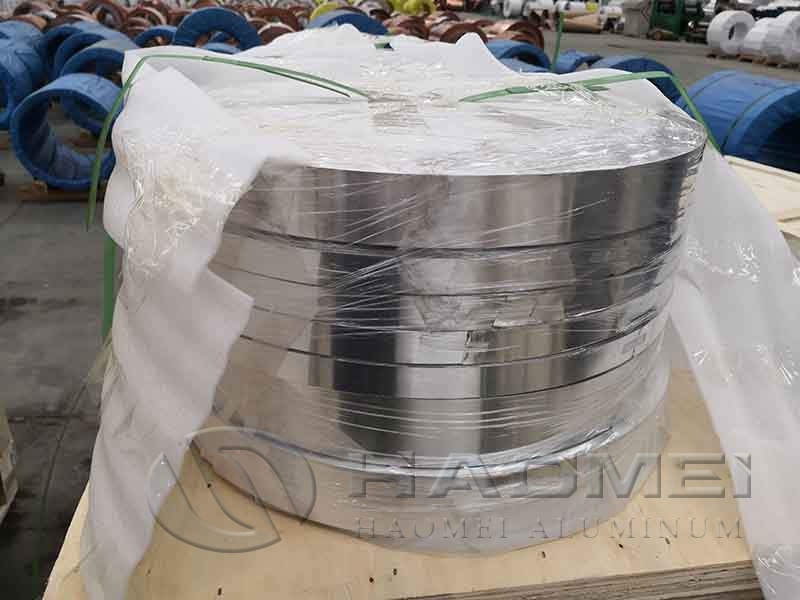
| Packaging | Export seaworthy, moisture barrier, pallets | Protects surface and edges during transport |
Do not evaluate price per kilogram alone. A cheaper painted aluminum strip can become expensive if edge burrs damage tools, coating cracks during bending, or color variation forces sorting. Compare usable yield, rejection rate, and packaging protection.
Packaging and handling rules that prevent peeling
Coated surfaces can be damaged after they leave the coating line. Storage and handling rules should be written into the quality agreement.
Use interleaving paper or protective film when surface finish is delicate.
Keep rolls dry; avoid condensation after container unloading.
Store away from acids, alkalis, and salt-laden air.
Control edge impact during forklift handling.
Use clean gloves when handling decorative surfaces.
Do not exceed the recommended stack height.
Allow cold material to reach workshop temperature before unwrapping in humid areas.
Confirm whether protective film must be removed before forming, after forming, or after installation.
For high-speed production, request sample material from the same coating route planned for mass production. Test it on the actual tooling, with real bend radius, lubricant, line speed, and temperature. Approve only after adhesion, color, surface quality, and forming results match the documented acceptance limits.
Original source: https://www.aluminumstrip24.com/news/coated-aluminum-strip.html
Tags: Coated aluminum strip, pre-painted aluminum strip, aluminum trim strip, PVDF coating, polyester coating,
Previous: Anodised Aluminium Strip
Next: Decorative Aluminium Strips