

Aluminum Strip
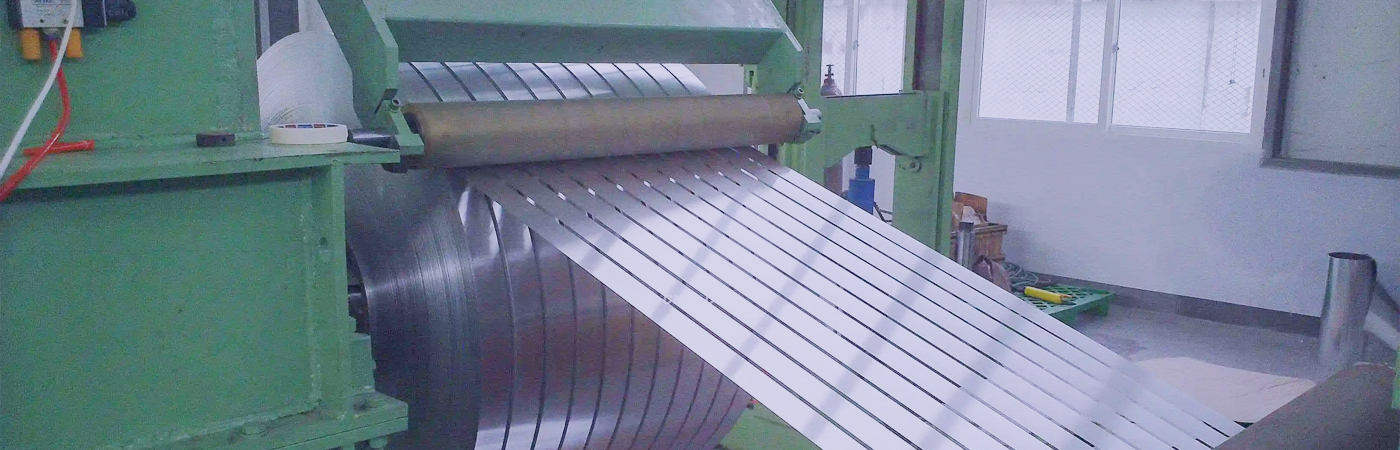
Slit-edge quality is often the deciding factor in aluminium strip performance. A coil can meet alloy and thickness requirements yet still cause stamping cracks, insulation damage, feeder jams, poor winding, or unsafe handling when burrs, edge waves, and camber are uncontrolled.
For converters, transformer manufacturers, ceiling-system producers, and stamped-part fabricators, the purchase order must define more than width and thickness. It should state edge condition, burr limit, camber limit, coil build, surface condition, and the inspection method. These items prevent disputes that chemical composition certificates alone cannot resolve.
Define the material and edge requirement before quoting
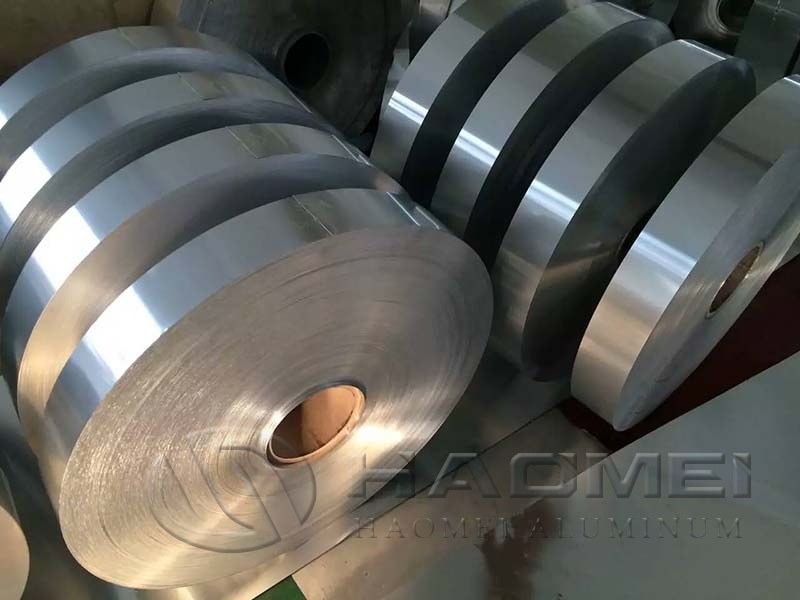
Aluminium strip is normally produced by slitting wide rolled material to the required width. Slitting creates two edges: a relatively smooth cut face and a fractured zone that may form a burr. Burr direction matters because the raised metal can face upward or downward during uncoiling and can damage film, enamel, dies, or operators' gloves.
Use the governing standard according to product form and market. EN 485-2 specifies mechanical-property requirements for wrought aluminium and aluminium-alloy sheet, strip, and plate. EN 485-4 covers dimensional tolerances. EN 573-3 defines chemical compositions and alloy designations. ASTM B209/B209M covers aluminium and aluminium-alloy sheet and plate and is commonly referenced in North American orders. For thin foil products, EN 546 or ASTM B479 may be more appropriate, depending on the product and application.
Do not assume that a general standard automatically establishes an acceptable burr height for your process. Edge quality is frequently an agreed technical requirement. Put the numerical limit and measurement method into the purchase order.
| Application condition | Recommended edge specification | Why it matters |
|---|---|---|
| Transformer winding | Deburred or low-burr slit edge; burr direction specified; no loose slivers | Protects enamel insulation and reduces turn-to-turn fault risk |
| Progressive stamping | Controlled burr height and consistent edge profile | Limits tool wear and reduces crack initiation at formed edges |
| Roll forming and ceiling profiles | Smooth edge with no edge wave; stable camber | Prevents tracking problems and visible distortion |
| Decorative coated material | Edge free from coating flake and metal pickup | Maintains finish quality after forming or trimming |
| General fabrication | Mill-slit edge or deburred edge, stated clearly | Aligns cost with the actual downstream requirement |
Alloy and temper must also fit the process. EN 573-3 identifies 1050 as an aluminium grade with a minimum 99.50% aluminium content. It is commonly selected where formability and electrical applications are important. 3003 contains manganese and is widely used where moderate strength and forming are needed. 5052 is a magnesium-containing alloy commonly specified for stronger corrosion-resistant fabricated components.
For highly formable electrical applications, 1050 Aluminium Metal Strip can be specified with an annealed temper when the forming process requires low yield resistance. For applications needing higher strength and better marine-atmosphere resistance, 5052 Aluminum Strip is often evaluated, but its temper must be matched to the bend radius and forming severity.
Set measurable tolerances and verify them at receipt
A complete requirement should state nominal dimensions plus permissible variation. Avoid writing only "standard tolerance," because standards contain different tolerance tables based on thickness, width, alloy, temper, and sometimes ordered tolerance class.
Use this specification checklist in the request for quotation and purchase order:
- Dimensions: Nominal thickness, width, and permitted positive or negative deviations. State whether thickness is checked away from the slit edge.
- Flatness and shape: Maximum camber over a stated reference length, plus any limits for edge wave, center buckle, and coil set.
- Edge: Slit, trimmed, rounded, or deburred. State maximum burr height, permitted burr direction, and whether sharp-edge removal is required.
- Surface: Define acceptable marks, dents, oil level, oxidation, handling scratches, and any protective film. For coated material, specify coating system and color standard separately.
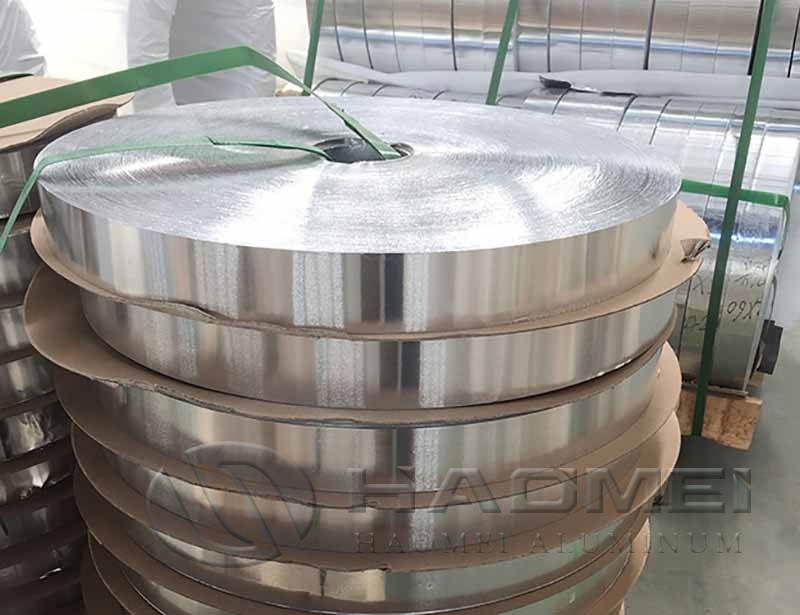
- Coil geometry: Inside diameter, outside diameter or maximum coil mass, winding direction, allowable telescoping, and whether oscillated winding is acceptable.
- Documentation: Mill test certificate showing heat or cast traceability, alloy, temper, chemistry, mechanical results where applicable, dimensions, and quantity.
- Packing: Moisture barrier, desiccant where justified by transport conditions, edge protection, pallet design, and labeling requirements.
| Inspection item | Practical method | Acceptance language to use |
|---|---|---|
| Thickness | Calibrated micrometer at agreed positions across width | "Measured values shall meet the stated thickness tolerance." |
| Width | Calibrated caliper or width gauge | "Width shall be within the stated tolerance at coil start, middle, and end." |
| Burr height | Optical microscope, profile measurement, or agreed burr gauge | "Maximum burr height: ___ mm, measured on both edges." |
| Camber | Place a cut length on a flat surface and measure lateral deviation over defined length | "Maximum camber: mm per m." |
| Surface | Visual examination under agreed lighting and viewing distance | "No defects detrimental to intended forming or appearance." |
| Mechanical properties | Tensile test to the applicable standard when required | "Test direction, sampling position, and required values shall be stated." |
For incoming inspection, retain a short sample from the outside, middle, and inside of each coil where practical. Edge condition can change as slitting knives wear. A certificate represents the supplied material, but it does not replace verification of the characteristics that disrupt your own line.
Use calibrated equipment with a documented calibration status. If formal lot acceptance is needed, agree on sampling and acceptance numbers in advance. ISO 2859-1 provides an attribute-sampling framework, but the sampling level and defect classification must be selected by the contracting parties.
Control process risk with a fit-for-use selection method
Start with the downstream operation, not the lowest material price. A narrow-width product used at high line speed usually has higher sensitivity to edge consistency and coil winding quality than a wide blank cut at low volume. Savings from a lower-cost mill-slit edge can disappear quickly if burrs create rejects, die maintenance, or insulation failures.
Use the following comparison before approval:
| Selection factor | Low-risk choice | When a lower-cost option may be acceptable |
|---|---|---|
| Edge condition | Deburred or tightly controlled slit edge | Non-critical trim parts with no contact-sensitive assembly |
| Temper | Trial-proven temper with recorded bend performance | Simple flat parts with no severe forming |
| Width tolerance | Process-specific tolerance based on tooling clearance | Manual cutting or wide-clearance fabrication |
| Coil build | Fixed ID, maximum mass, tight telescope limit | Operations that cut coils into short lengths before use |
| Surface protection | Interleaving or protective film for cosmetic parts | Hidden structural parts with no appearance requirement |
Before approving regular supply, run a production trial using material from the intended source and slit condition. Record burr direction, die clearance, lubrication, feed speed, reject type, and coil-end behavior. For electrical winding, inspect insulation after winding rather than evaluating the metal edge alone. For stamped components, inspect formed edges and tool condition after a meaningful run length.
Purchase-order release checklist:
- Alloy, temper, and governing standard are identified.
- Thickness, width, camber, and flatness limits are numerical.
- Burr height, edge type, and burr direction are stated.
- Surface and coating acceptance criteria are defined.
- Coil ID, maximum mass, winding method, and packing are confirmed.
- Certificate content, traceability, sampling, and nonconformance handling are agreed.
- A trial has validated performance on the actual converting or forming line.
Original source: https://www.aluminumstrip24.com/news/aluminium-strip.html
Tags: aluminium strip, slit edge quality,
Previous: Metal Strip Aluminium
Next: Aluminum Strip Transformer