

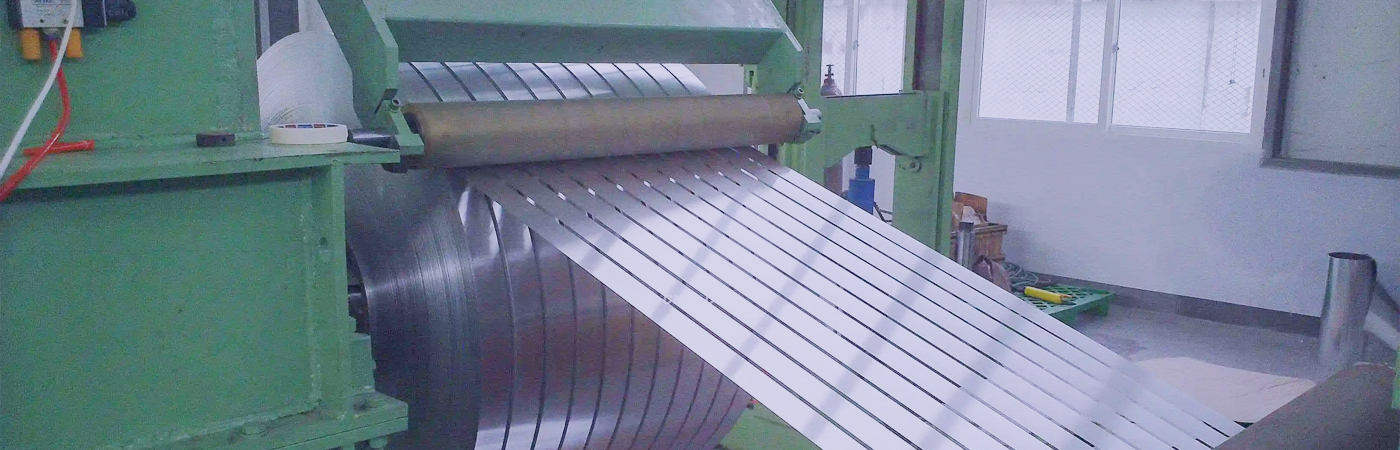
Aluminum Strip Transformer
Transformer manufacturers increasingly evaluate aluminum conductors for distribution transformers, dry-type transformers, and electrical reactors. Recent English-language questions on search engines and technical Q&A communities focus less on whether aluminum can conduct electricity and more on how to specify the correct material for stable, efficient winding production.
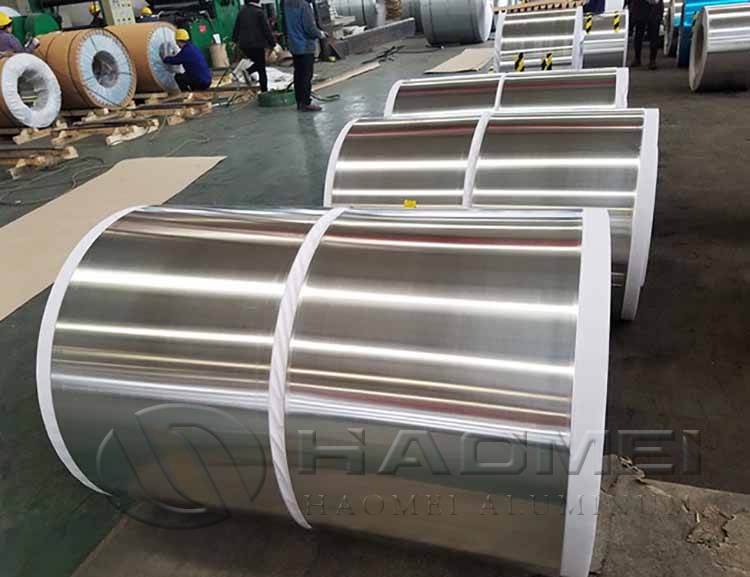
1. Can aluminum strip really replace copper in transformer windings?
Yes, aluminum can replace copper in many transformer winding designs, but it is not a direct one-to-one dimensional substitution. Aluminum has about 61 percent of the electrical conductivity of copper by volume. To carry equivalent current with similar temperature rise, an aluminum conductor usually needs a larger cross-sectional area.
The practical advantage is lower material weight and often lower conductor cost. Aluminum also provides good corrosion resistance when correctly insulated and connected. However, winding windows, terminal design, clamping pressure, and thermal calculations must all accommodate the larger conductor dimensions.
For low-voltage windings, a properly designed aluminum strip transformer can achieve dependable efficiency and service life. The critical point is that the transformer must be designed specifically for aluminum. Replacing copper with an identical-width and identical-thickness aluminum conductor can increase resistance, heat generation, and winding losses.
| Property | Aluminum Conductor | Copper Conductor | Design Effect |
|---|---|---|---|
| Electrical conductivity | About 61 percent IACS | About 100 percent IACS | Aluminum needs more cross-sectional area |
| Density | About 2.70 g/cm3 | About 8.96 g/cm3 | Aluminum winding is much lighter |
| Relative material cost | Usually lower | Usually higher | Aluminum can reduce conductor expenditure |
| Oxide behavior | Forms a stable oxide layer | Less insulating oxide concern | Connection preparation is important for aluminum |
2. Which aluminum grade is best for transformer winding strip: 1050, 1060, or 1070?
For transformer conductors, high-purity 1000-series aluminum is commonly preferred because it combines high electrical conductivity with good formability. Grades such as 1050, 1060, and 1070 are widely specified, although the final selection should match the electrical and processing requirements.
1050 is suitable for many conventional electrical applications where good conductivity and stable forming are required. 1060 is often selected for transformer winding because of its high aluminum content, consistent electrical properties, and good workability. 1070 generally offers still higher purity and conductivity, making it attractive where resistance control is especially strict.
Temper also matters. Fully hard material can offer improved dimensional stability, while softer tempers may be easier to wind on equipment with tight bending radii. The correct choice depends on conductor thickness, winding tension, edge geometry, insulation process, and transformer capacity.
A manufacturer comparing common high-purity options may review 1060 Aluminum Strip for Sale for standard electrical-winding applications, while 1070 Aluminum Flat Strip can be considered when higher aluminum purity is required.
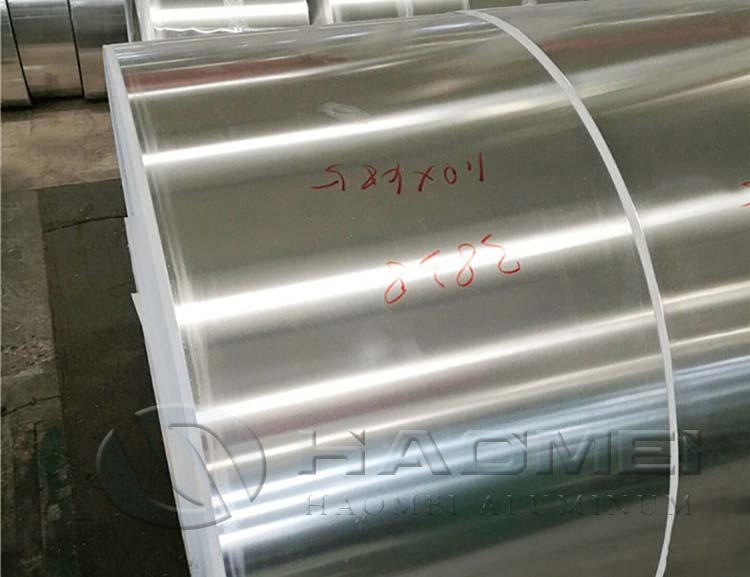
3. How do I calculate the right aluminum strip size for a transformer?
Start with the required current, allowable current density, winding temperature rise, and available winding space. The basic conductor cross-section is calculated from current divided by the selected current density. Because aluminum has higher resistivity than copper, the required area should then be adjusted to meet resistance and thermal-loss targets.
For example, if a copper design uses a 100 mm2 conductor area, an aluminum design may require approximately 160 mm2 or more to obtain a similar resistance level. The exact figure is not universal because conductor length, cooling method, insulation thickness, operating duty, and permissible temperature rise all affect the final design.
Width and thickness should be selected together. A wider, thinner conductor can improve winding fill in some designs, but extremely thin material may be more sensitive to tension variation, edge damage, and handling marks. A thicker conductor may improve mechanical robustness but can increase bending stress during winding.
| Specification Item | Why It Matters in Transformer Winding |
|---|---|
| Thickness tolerance | Supports consistent winding build and insulation spacing |
| Width tolerance | Helps maintain accurate coil geometry |
| Edge condition | Reduces insulation scratching and crack initiation |
| Electrical resistivity | Determines conductor loss and heat generation |
| Surface cleanliness | Supports insulation adhesion and reliable processing |
| Flatness | Prevents uneven winding tension and telescoping |
4. Does aluminum strip need a special surface treatment before transformer winding?
In most cases, the conductor should have a clean, dry, smooth surface free from oil, heavy oxidation, burrs, scratches, and embedded particles. Aluminum naturally forms a thin oxide film. This film is normally not a problem inside an insulated winding, but it can create resistance at mechanical or electrical joints if preparation is poor.
For welded, brazed, or bolted connections, surface preparation and connector selection are essential. Oxide removal, suitable joint compounds where applicable, and controlled tightening torque can reduce contact resistance. Connection parts should be rated for aluminum use rather than assumed to perform identically with copper.
During winding, edge quality is particularly important. Sharp edges or burrs can damage paper, enamel, or polymer insulation. Request rounded, deburred, or carefully trimmed edges when the winding process uses thin insulation layers or high winding tension.
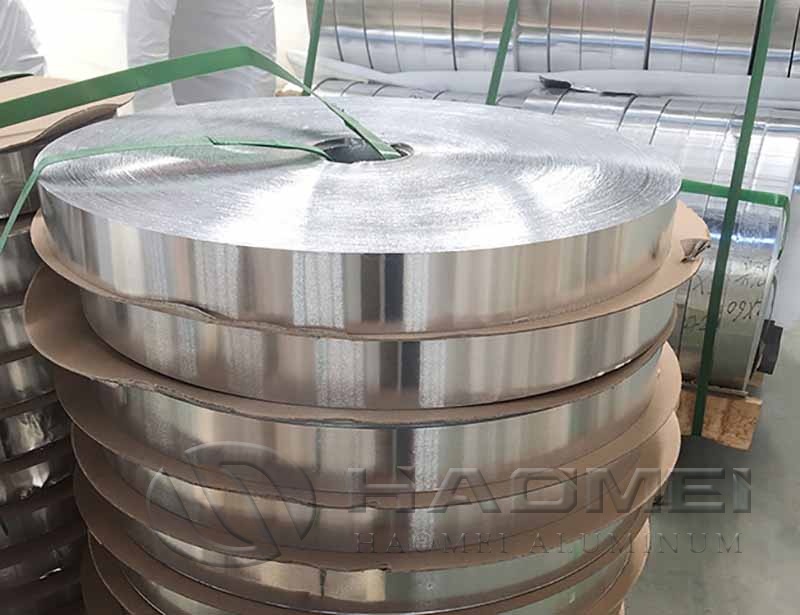
5. What quality checks should I request before ordering aluminum strip for a transformer?
A useful specification should include alloy, temper, thickness, width, dimensional tolerances, edge condition, coil inner diameter, coil weight, surface requirements, and electrical performance requirements. Material certificates should report chemical composition and mechanical properties. For electrical applications, resistivity or conductivity data is especially valuable.
Potential users should also ask whether the material is slit from stable parent stock and whether the slitting process controls burr height. A visually bright surface alone does not confirm winding quality. Flatness, camber, edge damage, thickness consistency, and cleanliness have a direct influence on winding speed and insulation reliability.
For a trial order, inspect several locations across the width and along the length rather than checking only the outer wrap. Measure thickness with a calibrated micrometer, inspect edges under magnification, and verify that the conductor winds smoothly without abnormal cracking, buckling, or excessive telescoping. These checks help match aluminum conductor performance to the actual transformer manufacturing process.
Original source: https://www.aluminumstrip24.com/news/aluminum-strip-transformer.html
Tags: aluminum strip transformer, transformer aluminum conductor, 1060 aluminum strip, 1070 aluminum flat strip,
Previous: Aluminum Strip
Next: Aluminium Strip for Transformer