

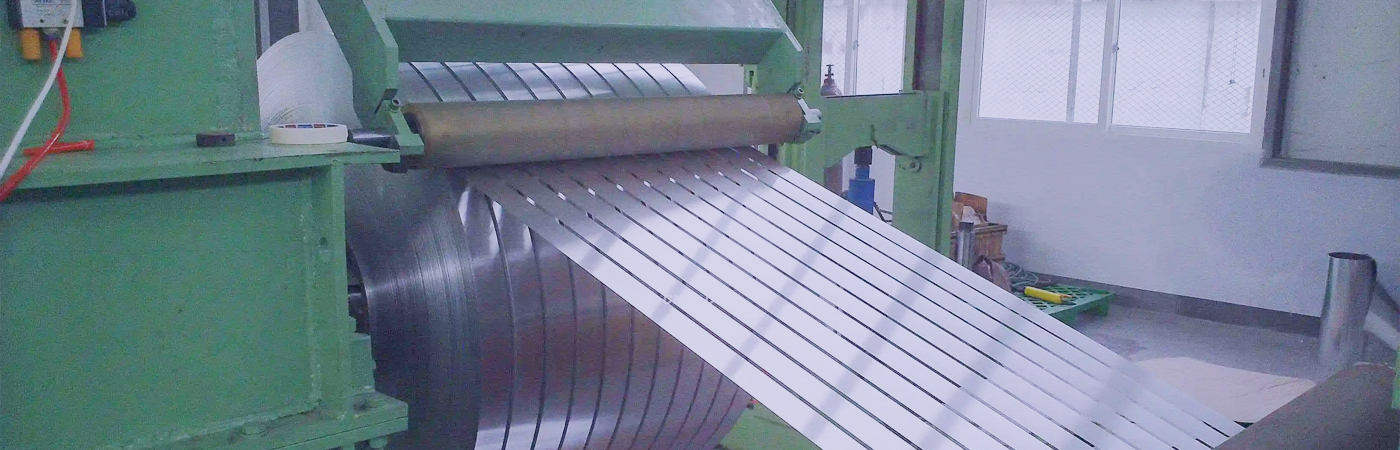
Aluminium Strips for Sale
When sourcing aluminium strips for sale, the highest-risk item is not only alloy selection. It is tolerance control after slitting. A narrow width range, clean edge, and stable coil winding prevent feeding jams, insulation damage, transformer hot spots, stamping burrs, and scrap at the user's line.
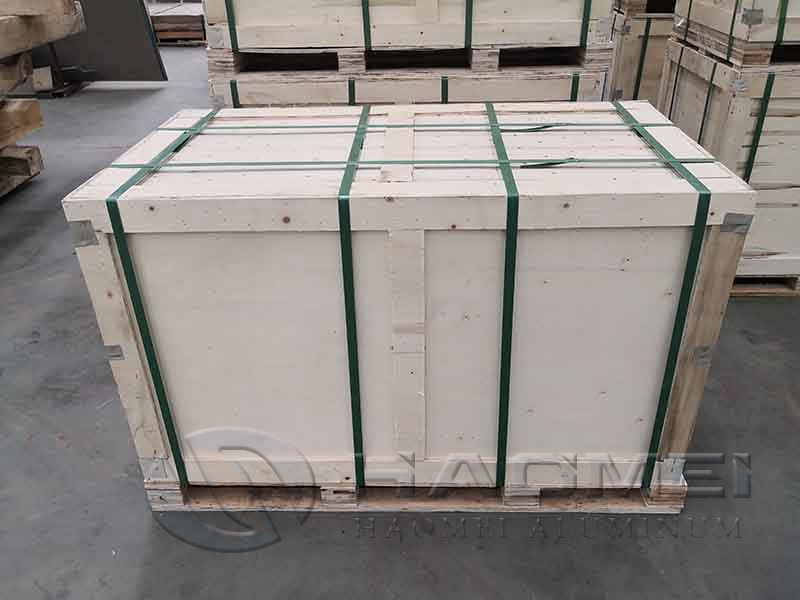
This article focuses on one practical feature: burr-controlled slit edge. It explains how to specify material, compare alloys, read cost drivers, and inspect shipments without relying on vague product claims.
Specify the strip before asking for price
A professional enquiry should define measurable terms. Missing data usually leads to wider quotations, longer confirmation cycles, or substitution risk.
| Item to specify | Practical requirement | Why it matters |
|---|---|---|
| Alloy and temper | Example: 1060 O, 3003 H14, 5052 H32 | Controls strength, formability, conductivity, and corrosion resistance |
| Thickness | State nominal value and tolerance in mm | Affects winding fill factor, stamping pressure, and weight |
| Width | State slit width and width tolerance | Prevents feeding misalignment and edge interference |
| Edge condition | Slit, deburred, round edge, or trimmed | Reduces burr damage and downstream scrap |
| Coil ID and OD | Common IDs include 300 mm, 405 mm, 508 mm, or 610 mm | Must match decoiler equipment |
| Surface | Mill finish, degreased, coated, or paper-interleaved | Prevents stains, scratches, and bonding failure |
| Standard | EN 485, EN 573, EN 515, ASTM B209/B209M, or agreed drawing | Creates an inspection basis |
| Certificate | EN 10204 3.1 mill certificate if required | Confirms chemistry, temper, and test results |
For electrical applications, high-purity grades are common. For example, 1060 Aluminum Strip for Sale is often selected where conductivity, formability, and controlled winding behavior matter more than high mechanical strength.
Alloy comparison for industrial strip applications
Aluminium density is about 2.70 g/cm³, roughly one-third of steel. This supports weight reduction, but each alloy family behaves differently. The Aluminum Association alloy system and EN 573 chemical composition rules are widely used references for grade identification.
| Alloy family | Typical strengths | Typical applications | Caution point |
|---|---|---|---|
| 1050, 1060, 1070 | High aluminium content, good conductivity, excellent formability | Transformer winding, cable armoring, heat exchange parts | Lower strength; edge burr control is critical for winding |
| 1100 | Good corrosion resistance, easy forming | Nameplates, fin stock, general fabrication | Not suitable where high strength is required |
| 3003, 3004, 3105 | Better strength than pure aluminium, good corrosion resistance | HVAC, ceiling systems, packaging components | Conductivity lower than 1000 series |
| 5052, 5005 | Stronger, marine and outdoor corrosion resistance | Enclosures, automotive parts, building trim | Harder material increases slitting tool wear |
| 6061, 6063 | Heat-treatable, good structural performance | Machined parts, transport components | Less common for very thin precision strip |
Where higher corrosion resistance is needed, especially in outdoor or enclosure applications, 5052 Aluminum Strip can be a better fit than pure aluminium grades.
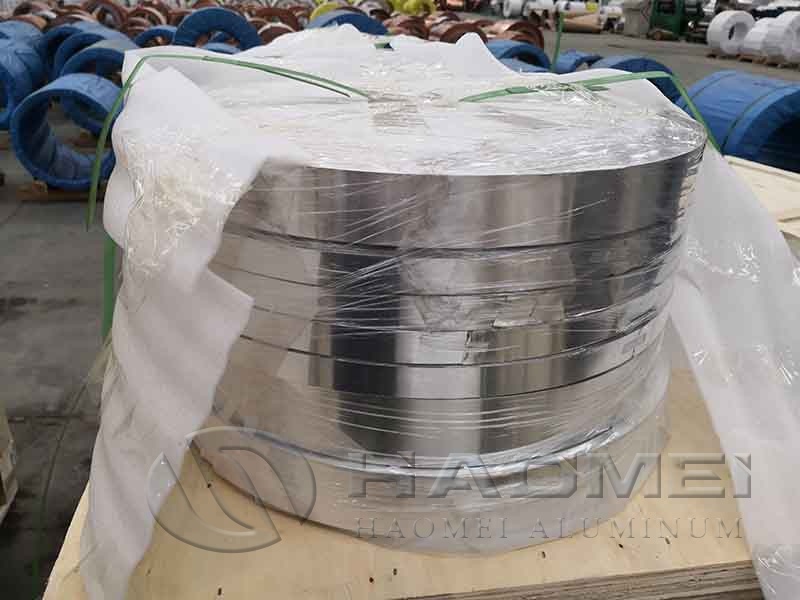
Burr-controlled edge: the feature to verify
A slit edge is created by rotary knives. If clearance, knife sharpness, strip hardness, or tension is poorly controlled, the edge may show burr, rollover, camber, or wave. These defects are costly because they often appear only after the material is loaded onto production equipment.
Use this inspection checklist:
| Check point | Recommended action | Acceptance basis |
|---|---|---|
| Burr direction | Inspect both edges with magnification or fingertip test using gloves | Agreed drawing or internal limit |
| Width variation | Measure at head, middle, and tail of the coil | EN 485-4 or purchase tolerance |
| Camber | Lay sample on a flat surface and measure deviation over length | Application-specific requirement |
| Coil winding | Check telescoping, loose wraps, and edge damage | No collapse during handling |
| Surface | Inspect for oil stains, scratches, black lines, and water marks | Visual standard or sealed sample |
For transformer winding, burrs can damage insulation paper and increase local electrical stress. For stamping, burrs accelerate die wear. For ceiling and decoration strips, edge defects create visible assembly gaps.
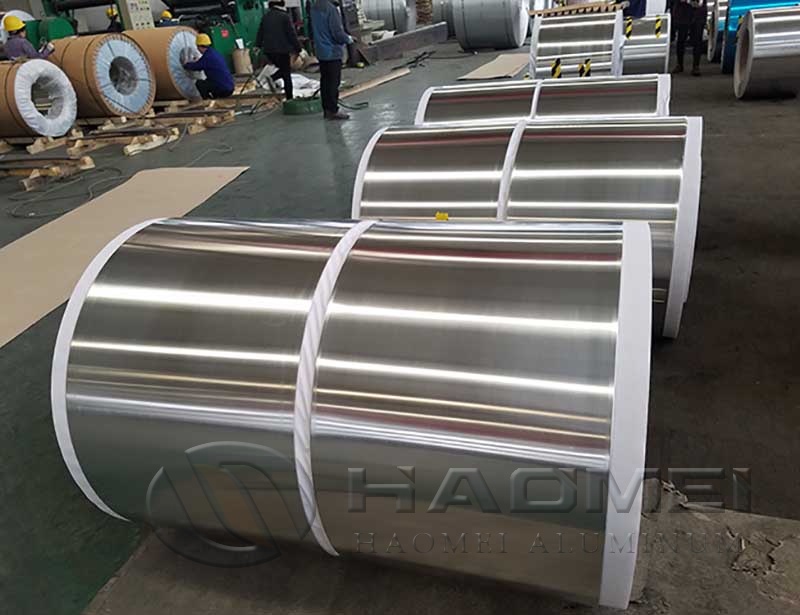
Process route and where defects enter
Most aluminium strip stock follows this route: cast slab or cast-rolled stock, hot rolling or continuous casting, cold rolling, annealing, tension leveling, slitting, inspection, and packing.
Each step has a risk area:
- Rolling: thickness variation, surface lines, oil residue.
- Annealing: incorrect temper, oxidation, sticking marks.
- Leveling: wave, poor flatness, residual stress.
- Slitting: burr, camber, edge cracks, width drift.
- Packing: moisture, coil collapse, impact damage.
Ask for the final slitting equipment capability, not only rolling mill capability. A mill may produce accurate parent coils but still ship unstable narrow strip if slitting control is weak.
Cost structure and market cycle factors
Aluminium strip pricing normally follows a transparent formula:
| Cost element | What it includes | How to control it |
|---|---|---|
| Aluminium base price | Usually linked to LME aluminium quotations | Use clear quotation date or pricing period |
| Regional premium | Logistics, duty, and local market supply factors | Compare same delivery term and destination |
| Conversion charge | Rolling, annealing, slitting, inspection | Narrow width and tight tolerance increase cost |
| Extras | Alloy, temper, surface protection, paper interleaving | Remove unnecessary options |
| Freight and packaging | Export wooden pallets, moisture barrier, container loading | Specify coil weight and packing method early |
The London Metal Exchange lists primary aluminium contracts in 25-tonne lots, and LME prices are widely used as a global reference. Regional premiums are commonly assessed by market reporting agencies such as Fastmarkets, CRU, or Platts, depending on region and contract practice.
Price cycles are influenced by alumina cost, power prices, smelter curtailments, freight rates, interest rates, inventory levels, and demand from construction, transport, packaging, and electrical sectors. Large-volume sourcing teams should avoid comparing offers issued on different LME dates unless the metal pricing basis is clearly normalized.
Standards, documents, and compliance checks
Use recognized standards when possible:
| Area | Common reference | Purpose |
|---|---|---|
| Dimensions and tolerances | EN 485-4, ASTM B209/B209M where applicable | Thickness, width, flatness, dimensional rules |
| Chemical composition | EN 573, Aluminum Association registration | Confirms alloy identity |
| Temper designation | EN 515, ASTM temper designations | Confirms O, H, T temper condition |
| Test certificate | EN 10204 3.1 | Traceable mill inspection document |
| Restricted substances | EU RoHS, REACH where applicable | Needed for electronics, electrical, and EU supply chains |
| Quality systems | ISO 9001, IATF 16949 for automotive supply | Confirms process control framework |
Do not accept a certificate that only states commercial grade without chemistry, temper, dimensions, and batch number. For electrical strip, request conductivity data when relevant. For coated or insulated strip, clarify coating thickness, adhesion method, and test standard separately.
Practical ordering checklist
Before confirming an order, align these points with the supplier:
- Alloy, temper, thickness, width, and tolerance.
- Edge type and burr acceptance limit.
- Coil ID, OD, maximum coil weight, and winding direction.
- Surface protection: dry, oiled, paper interleaved, or film protected.
- Packing: seaworthy pallet, moisture barrier, desiccant, and edge guard.
- Certificate: heat number, coil number, chemistry, mechanical data, and inspection result.
- Pricing: LME basis, premium, conversion charge, payment term, Incoterms, and validity.
- Claim process: photos, samples, time limit, and replacement or credit method.
A well-defined strip order should read like a production specification, not a general material request. The tighter the edge, width, flatness, and surface requirements, the more important it is to audit slitting capability and packing discipline before shipment.
Original source: https://www.aluminumstrip24.com/news/aluminium-strips-for-sale.html
Tags: Aluminium strips for sale, aluminium strip stock, aluminum strip tolerance, transformer winding strip,
Previous: Aluminium Strip 5mm
Next: 1060 Aluminum Strip